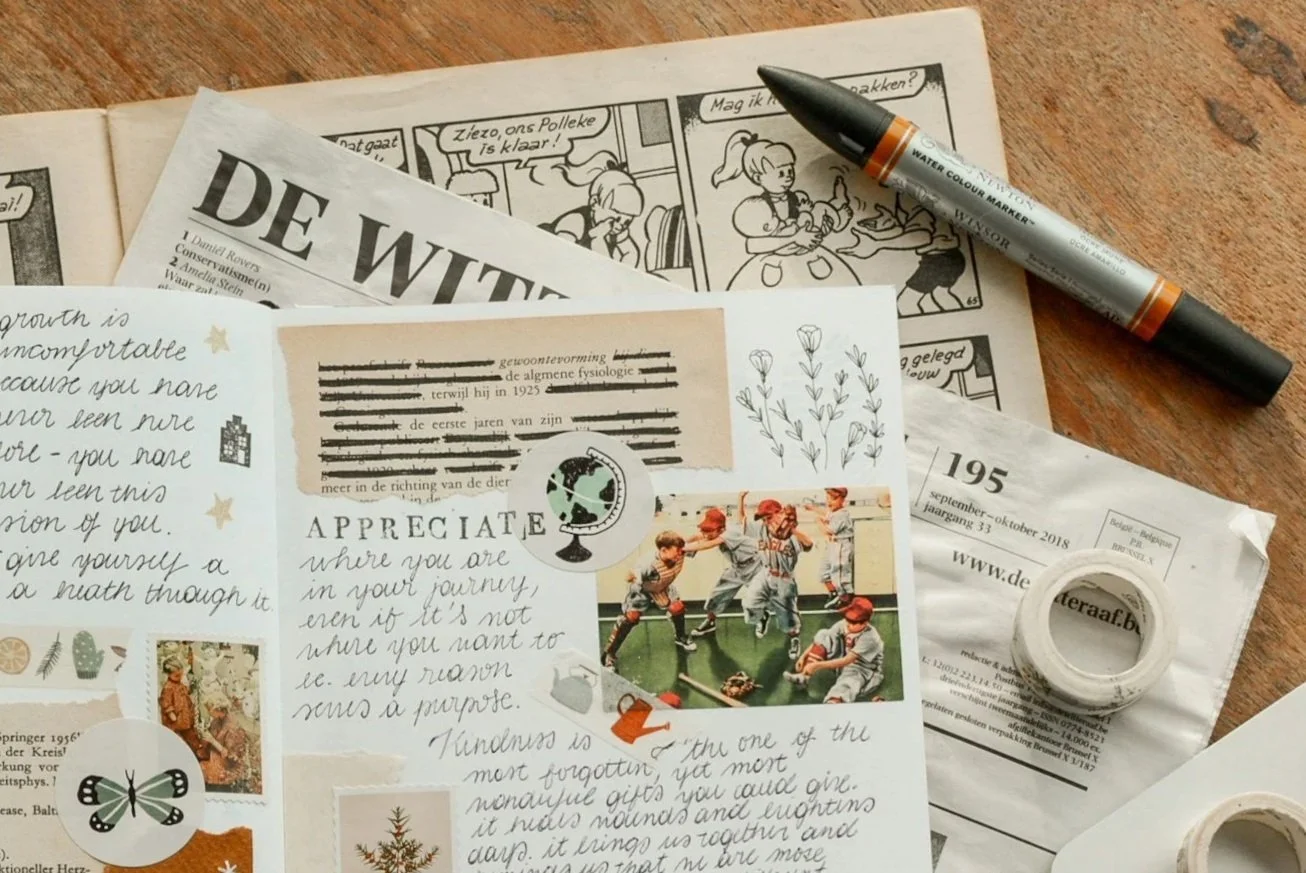
What I love most about junk journaling is that it can be so simple. It really takes the phrase "one man's trash is another man's treasure" to a whole new level.
To me, it is all about finding beauty in the mundane things that surround us. When it comes to travelling, I think those little things sometimes tell the best stories.
Ticket stub from a train ride through the mountains.
Napkin from a little café near the beach.
Receipt from a dinner you'll never want to forget.
On their own, they might not seem like much of a souvenir, but together they can become a visual diary.
The best part? You don’t need much of an investment to get started.
Start Here
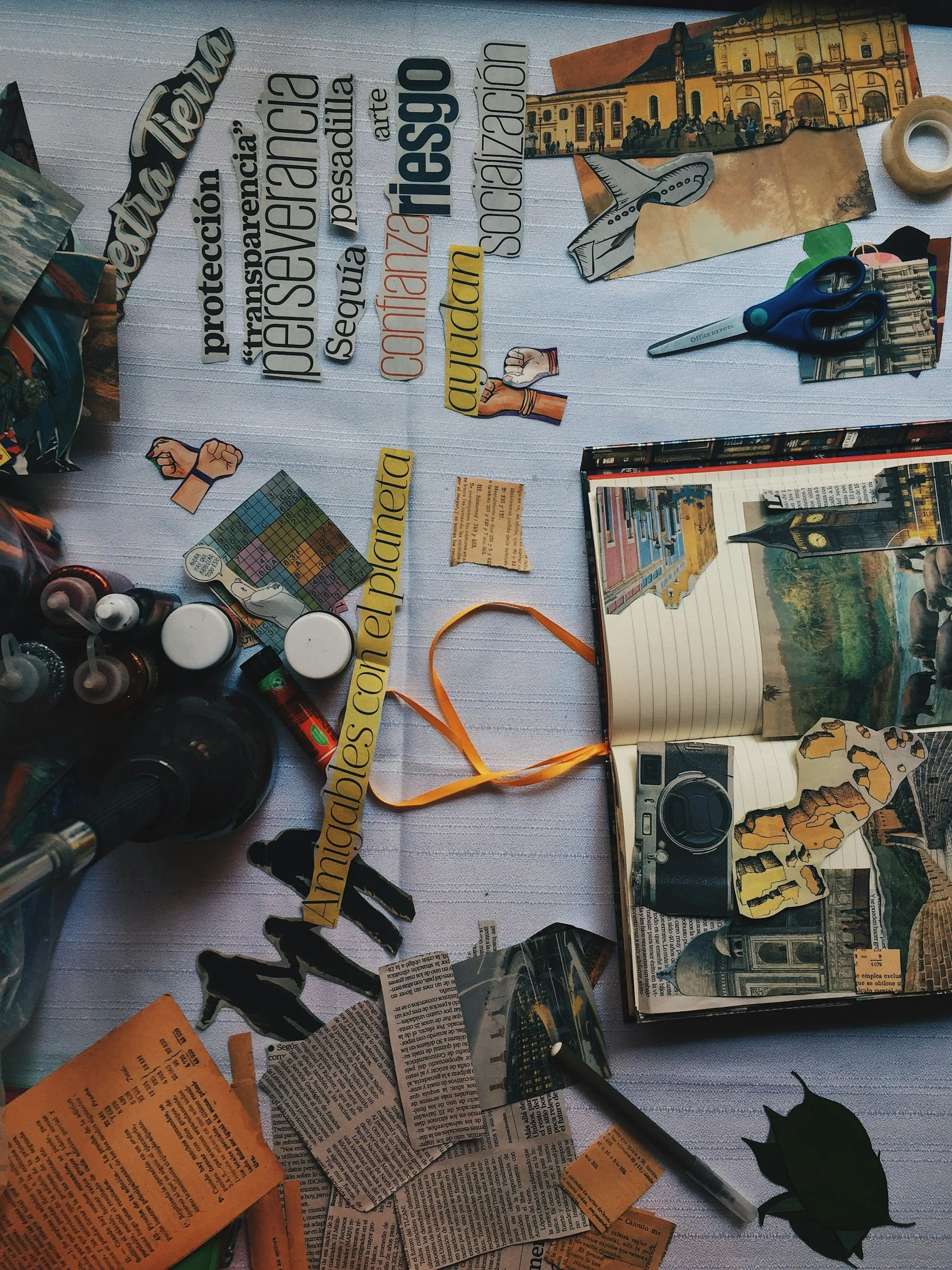
To get started, all you really need is a bound journal, preferably one with thicker pages (I will explain the importance of this in a second), a binding medium whether that be Elmers glue or Mod Podge, a collection of said "junk", and a little vision.
It can be as simple as wanting to catalog the everyday things you find beautiful or creating a visual diary of a particular event, trip, or experience.
One of my favorite things about junk journaling is that it can feel loose and unstructured. Sometimes, the best pages are the ones that come together as you go!
Acquiring "Junk"
On second thought, this might be my favorite thing about junk journaling.
Once you start acquiring the junk needed, you really find yourself appreciating the places, businesses, and people that put a lot of thought (and design budget) into the little things. A beautifully branded napkin, a thoughtfully designed product label, an interesting sticker.
Traveling makes this especially fun because you're constantly surrounded by unfamiliar designs, languages, packaging, and little pieces of everyday life that might look completely different from what you're used to at home.
It is all there and the more you look, the more you can find!
The Mechanics
Remember when I mentioned choosing a journal with thicker pages? This is where that really comes into play!
Once I feel like I have collected enough junk for a page, I will start by trimming any excess paper/plastic/ material from my collected junk that will add more bulk to the page than needed. Once all the junk pieces are cut out to my liking, I place them on a table and arrange, then rearrange, and then arrange again, until I have the right look for my page. This part is important because once you start gluing down pieces, there is not going to be much opportunity to change your mind.
I then apply a thin layer of the binding medium (glue) to the page with a paint brush (or your fingers if you'd like to take a hands on approach). If the pages of your journal are thin, the glue may make your pages soggy and hard to work with. Hence, the recommendation for thicker pages!
Once that layer is down, I begin laying down my collected pieces from back to front. Each time you lay down a layer apply a thin coat of the binding medium back on top of that. This top layer will help keep everything together and protected. Do this until all of your pieces are added.
I like to sprinkle in the occasional glitter, leaves, flower petals to add some fun dimension. Once everything is dry, you can even go back in with pens or markers and add notes, quotes, or thoughts. This is where your journal can really come to life!
Whose Crazy Idea Was This, Anyway?
Where did the junk journaling trend come from? Now, that is actually an interesting topic.
The idea of collecting and preserving little pieces of everyday life is hardly new. People have been keeping scrapbooks, commonplace books, and collections of personal memorabilia for centuries.
But, the real modern resurrection likely stemmed from periods of scarcity, like the Post-WWII timeframe. Many during that period made books and journals using scraps of newspaper and paper packaging. At that time, it was what could be afforded and store bought materials weren't very accessible or affordable.
It just goes to show, unlike many forms of scrapbooking, you don’t need to invest in expensive supplies, matching paper collections, or elaborate equipment to get started.
Sometimes, all you need is a journal, a little glue, and a pocket full of things you couldn't bring yourself to throw away.
What I Collect When I Travel
A little bit of this, a little bit of that, a whole lotta junk. Here are the little things I like to collect when I travel:
Receipts - Specifically train tickets, parking receipts, and anything with color or a cool design!
Bar/Cafe Napkins - I like these because there is always a good treat or drink memory associated with them. Plus, they are thin and soak up glue so they stick to the page well.
Stickers - I love using stickers because I usually feel very conflicted on where to put my stickers once I buy them. You can even peel used stickers off of things like take out bags or grocery purchases.
Scraps of Local Newspaper - A bonus is that these always include fun little phrases or tid bits of info. Plus, they are usually cheap and plentiful!